


Women’s Sleep Health
Understanding. Empowering. Transforming.
Sleep is essential to every aspect of women’s health — from physical well-being and mental resilience to hormonal balance and long-term disease prevention. Yet, many women experience unique sleep challenges that remain underrecognized and undertreated.
The AASM is dedicated to advancing scientific understanding and practical solutions for sleep health in women across all life stages — from adolescence and reproductive years to pregnancy, menopause, and beyond.
Why It Matters
Poor sleep impacts women differently — influencing mood, cardiovascular risk, cognitive performance, and overall quality of life. By investing in better understanding, we move closer to personalized, effective sleep health solutions for all women.
Women’s Sleep Challenges
Women’s Sleep Health Across Life Stages
Menstrual Cycle
- Key Point: Hormonal fluctuations affect sleep quality and duration.
- PMS symptoms and hormone shifts → trouble falling asleep, lighter sleep.

Fertility, Pregnancy, and Postpartum
Poor Sleep Prevalence:
- Pregnancy: 44%
- Postnatal: 67%

Early Pregnancy:
- Increased sleepiness
- Nausea, vomiting, frequent urination disrupt rest
Later Pregnancy:
- Snoring, heartburn, fetal movement, restless legs
- Insomnia risk highest in third trimester
Fertility, Pregnancy, and Postpartum
Poor Sleep Prevalence:
- Pregnancy: 44%
- Postnatal: 67%
Early Pregnancy:
- Increased sleepiness
- Nausea, vomiting, frequent urination disrupt rest
Later Pregnancy:
- Snoring, heartburn, fetal movement, restless legs
- Insomnia risk highest in third trimester
Postpartum Period
- Frequent night wakings for feeding
- Stress + hormonal changes → postpartum insomnia
Menopause
- Hormonal changes = disturbed sleep
- Hot flashes & night sweats
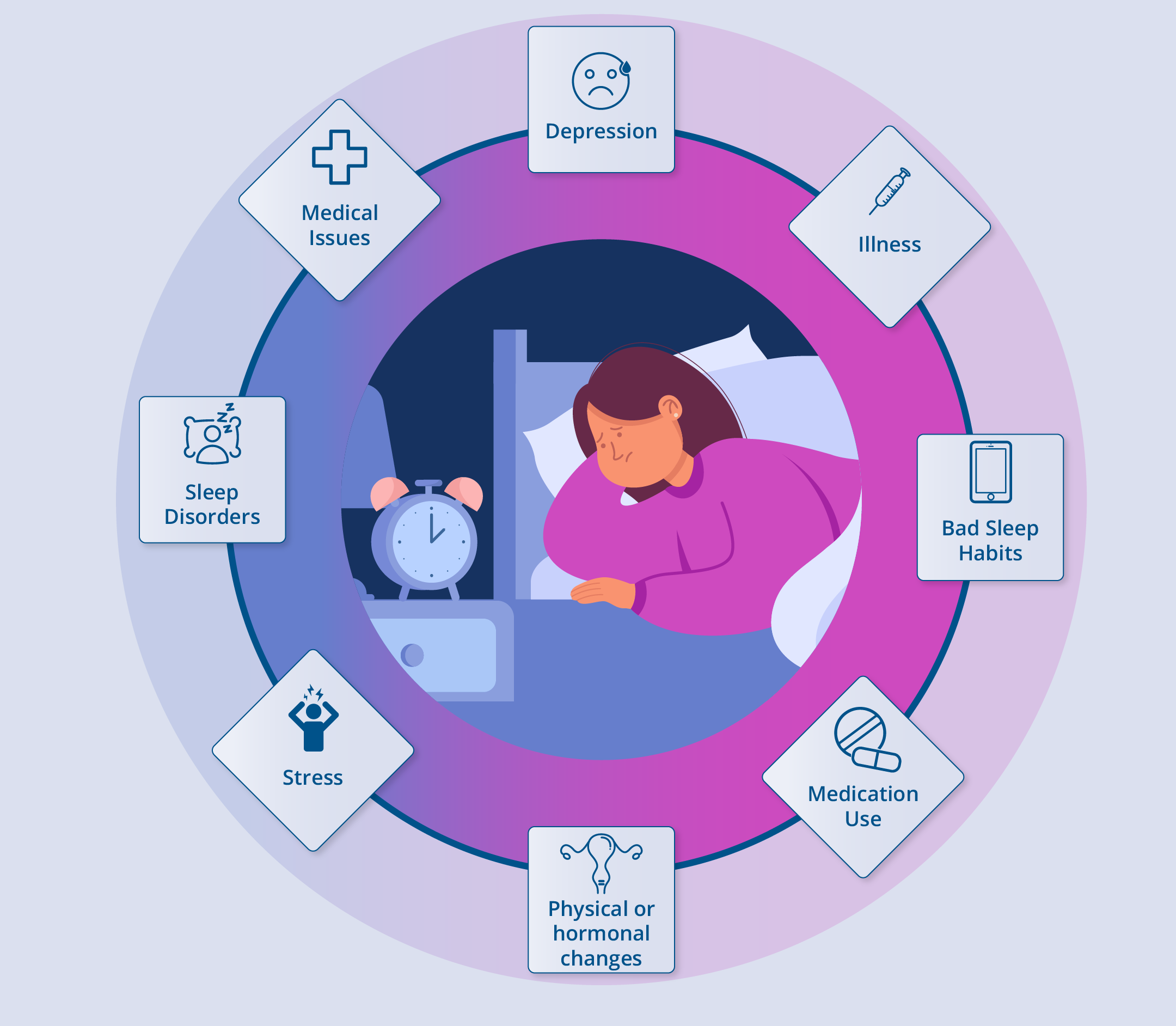
Recognizing factors that affect women’s sleep health allows healthcare providers and women themselves to more adequately address the underlying causes of poor sleep, whether this be due to an undiagnosed sleep disorder, hormonal changes, or other factors.
Women’s Sleep Health Initiative Sponsors
Platinum


Gold


Silver

